Four weeks ago I started a simple weekly review habit: every Friday I feed Grok a short summary of the week’s content-operations work and ask for patterns, open risks, and suggested focus areas for the next week. This post records what actually happened.
Let’s see what it does on a real Tuesday.
The Weekly Prompt Skeleton
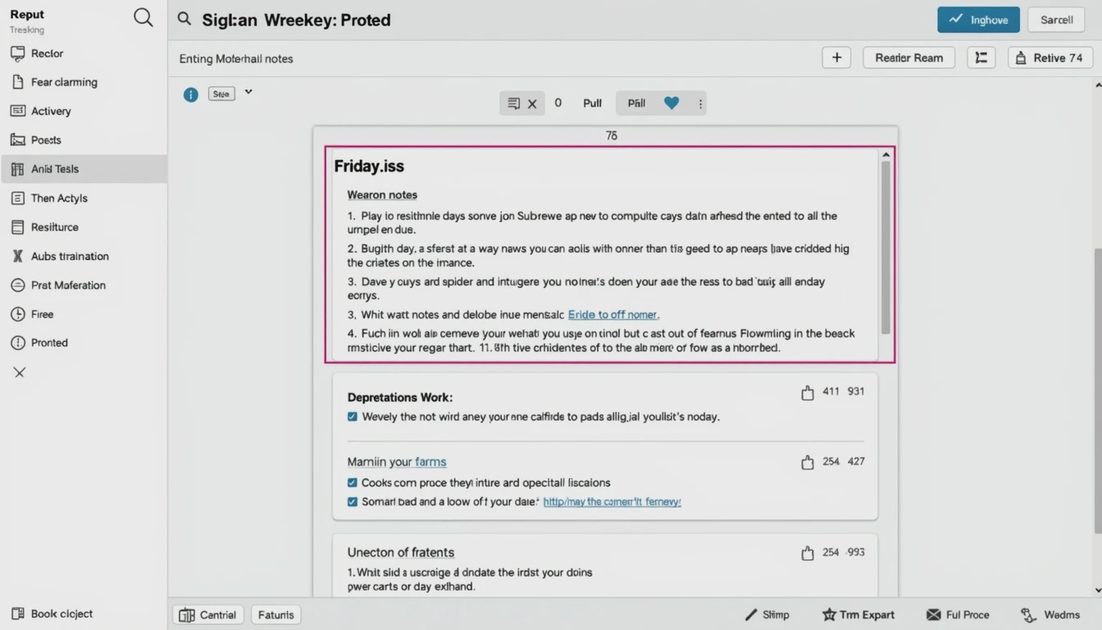
Each Friday I paste a brief structured note covering:
Major deliverables shipped
Meetings that generated action items
Research or brief work completed
Friction points that slowed the week
Any stakeholder feedback worth capturing
Then I ask: “Summarize patterns, list open risks, and suggest three focus areas for next week. Do not invent items that are not in the notes.”
Four-Week Snapshot
Week | Time spent on review | Useful output? | Action taken from Grok suggestions |
|---|---|---|---|
1 | 18 min | Partial | Adjusted one meeting follow-up process |
2 | 14 min | Yes | Added a missing owner check to briefs |
3 | 12 min | Yes | Flagged a recurring research bottleneck |
4 | 11 min | Yes | Kept two focus areas, dropped one |
Preparation time dropped as the note format stabilized.
What Consistently Helped
Spotting recurring friction (the same type of delay appeared in three of four weeks)
Turning scattered notes into a short risk list I could scan on Monday
Forcing a written record of what actually shipped versus what felt busy
What Did Not Help
Generic productivity suggestions that ignored the specific constraints of the week
Overly optimistic framing of incomplete work
Recommendations that assumed resources I do not control
I now explicitly tell Grok: “Only suggest actions that fit inside a normal content-operations workload with current headcount.”
Changes I Made Because of the Reviews
Added a permanent “owner and deadline check” step to every content brief.
Blocked 25 minutes on Monday mornings for the highest-risk open item from the previous Friday.
Stopped treating “research started” as progress unless a usable brief existed by end of week.
These three changes came directly from patterns the weekly reviews made visible.
Limits of the Habit
The review is only as good as the notes I feed it. Weeks when I rushed the Friday summary produced vaguer, less useful output. The tool cannot compensate for thin input.
It also cannot see political context or unspoken stakeholder pressure. Those factors still require human judgment when I decide which suggested focus area actually deserves Monday attention.
Practical Judgment After Four Weeks
The weekly review is worth keeping. It costs roughly 12–15 minutes once the format is stable and consistently surfaces patterns I would otherwise miss in the rush of delivery. It does not replace my own prioritization; it makes the prioritization evidence more visible.
I will continue the habit for another month and then decide whether to keep, simplify, or drop it. So far the signal has been positive enough to justify the time.
Less hype, more shipped work. The review does not create new work. It makes the existing work easier to see and therefore easier to improve.
How the Friday Note Evolved
Week 1 notes were long and unstructured. By Week 3 I had settled on a five-line template:
Shipped this week
Still open
Biggest friction
Stakeholder signal worth keeping
One thing I want to protect next week
Shorter input produced clearer output. The tool reflects the quality of the material it receives.
What I Still Decide Myself
Even when Grok surfaces a clear pattern, I still decide:
Whether the pattern is important enough to change a process
Whether the suggested focus area fits the actual calendar for the coming week
Whether a risk is real or simply a reflection of a temporarily heavy load
The review supplies evidence. It does not supply priorities. That distinction has kept the habit useful instead of noisy.
Early Signs of Habit Stability
Preparation time dropped and stayed low
I started looking forward to the Friday summary instead of treating it as extra work
Two process changes from the reviews are still in place after the initial four weeks
These are modest signals, not proof of long-term value. They are enough to continue the experiment for another month.
When I Would Drop the Habit
I will stop if:
The output becomes consistently generic
The time cost rises without new insight
I find myself ignoring the suggested focus areas every week
So far none of those conditions have appeared. The weekly review remains a lightweight way to turn scattered delivery work into visible patterns and small, concrete improvements.
I have also started sharing a one-paragraph version of the Friday summary with my manager when the patterns affect cross-team work. The shared version strips any internal friction language and focuses only on observable risks and next-week focus areas. That small transparency step has made at least one recurring bottleneck visible to someone who can help remove it.
The larger lesson after four weeks is simple: a short, consistent review habit powered by Grok can surface patterns that busy delivery weeks otherwise hide. The value sits in the combination of structured input, restrained prompting, and human final judgment about what actually deserves attention on Monday. Used that way, the weekly review earns its fifteen minutes.