Grok is useful for many content-operations tasks. It is not a private notebook. Anything I paste becomes part of a conversation that leaves my machine. That single fact drives a short, non-negotiable list of material I never put into the tool.
Let’s see what it does on a real Tuesday.
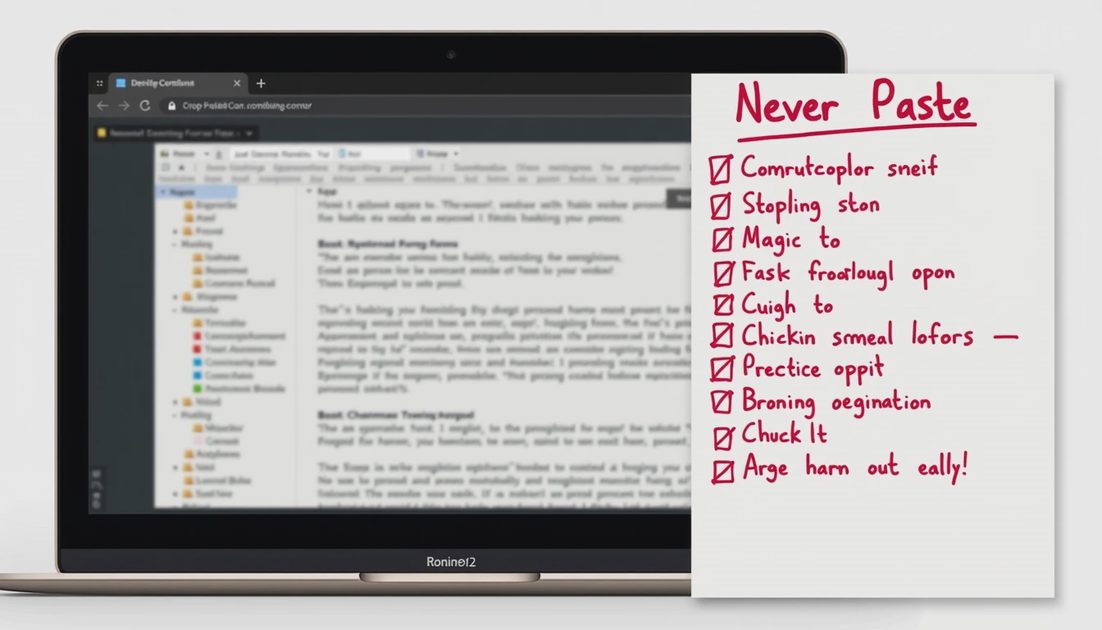
The Hard No List
I never paste:
Unannounced product features or roadmap details
Customer names, account numbers, or identifiable usage data
Internal pricing, discount discussions, or contract terms
Colleague performance notes or sensitive HR-related comments
Full email threads that contain any of the above
Why the Boundary Exists
Even when a tool claims strong privacy practices, the practical risk remains: once text leaves my controlled environment, I no longer fully control where it can appear or how it can be used. Content operations work regularly touches material that would create real problems if it leaked or was misunderstood outside the company.
The boundary is not about distrust of a specific model. It is about the nature of the work.
What I Do Instead
When a task needs context that sits on the hard-no list, I use one of three methods:
Paraphrase first — Rewrite the necessary points in neutral language that removes identifiers and confidential details, then feed only the paraphrase.
Redact heavily — Keep the structure of the notes but replace every sensitive noun with a placeholder ([CUSTOMER], [FEATURE], [AMOUNT]).
Keep it fully manual — For high-sensitivity items I simply do the work myself.

Decision Table I Use in Practice
Material type | Paste into Grok? | Preferred alternative |
|---|---|---|
Public competitor pages | Yes | — |
Internal meeting notes (no sensitive details) | Yes, after light cleaning | — |
Customer-specific feedback | No | Paraphrase or redact |
Unreleased feature descriptions | No | Manual only |
Pricing or contract language | No | Manual only |
Full stakeholder email threads | Only after redaction | Paraphrase key points |
Real Example of the Paraphrase Method
Original note (never pasted):
“Acme Corp is unhappy with the Q3 reporting delay. Sarah mentioned they may reduce seats if we miss the new dashboard by November.”
Paraphrased version I actually used:
“One mid-market customer expressed concern about a reporting delay and indicated possible seat reduction if a promised dashboard slips past the current target month.”
The paraphrase preserved the decision-relevant information and removed every identifier. Grok could still help structure a response. The risk stayed low.
What I Tell New Team Members
“If you have to ask whether something is okay to paste, it is not okay to paste. Paraphrase or keep it offline.”
That rule is easier to remember than a long policy document and has prevented more accidental exposure than any technical control I have seen.
The Cost of the Boundary
Yes, the extra paraphrasing step takes time. On a typical week it adds roughly 15–25 minutes of preparation across all Grok tasks. That cost is still lower than the potential cost of a single sensitive detail appearing in the wrong place.
When the Boundary Feels Inconvenient
The boundary is most annoying on days when a long, messy stakeholder thread would be perfect input for a synthesis task. Those are exactly the days I slow down and paraphrase. Convenience is not a good reason to move confidential material into an external tool.
Less hype, more shipped work. The tool remains useful inside a clear perimeter. Outside that perimeter the work stays human and local.
How I Handle Edge Cases
Some material sits in a gray zone:
Internal process documents that contain no customer data but do describe unreleased workflows
Stakeholder feedback that is critical but not tied to a named account
Draft messaging that has not yet been approved for external use
For these I default to redaction or full manual work. If I cannot remove the risk with a quick paraphrase, I keep the text offline. The extra minutes are cheaper than a later explanation.
What the Boundary Does Not Solve
This list only addresses what I paste. It does not replace broader company policies on data handling, approved tools, or retention. It is a personal operating rule that sits on top of those policies, not a substitute for them.
Team Habit I Encourage
I ask colleagues who use Grok for similar work to keep their own hard-no list visible—either as a pinned note or a short checklist near their keyboard. The physical reminder reduces the chance of a rushed paste on a busy afternoon.
Review Cadence
Every quarter I re-read the list and ask whether any new category of sensitive material has appeared in my regular work. So far the original five items have covered every real case. If a new category emerges, I add it rather than relying on memory under deadline pressure.
The boundary is simple on purpose. Complex rules get forgotten when the inbox is full and the meeting just ended. A short, visible “never paste” list survives real Tuesdays better than a long policy page.
I also keep a one-line log when I almost pasted something sensitive and then stopped. The log is private and short. Its only purpose is to show me whether the near-misses are increasing or decreasing over time. So far the number is low and stable, which tells me the rule is still doing its job without creating constant friction.
The practical outcome is straightforward: Grok remains a regular part of my workflow for public material, cleaned notes, and paraphrased context. Everything that carries real confidentiality risk stays outside the tool. That division has held for months and continues to feel like the right trade-off between speed and responsibility.