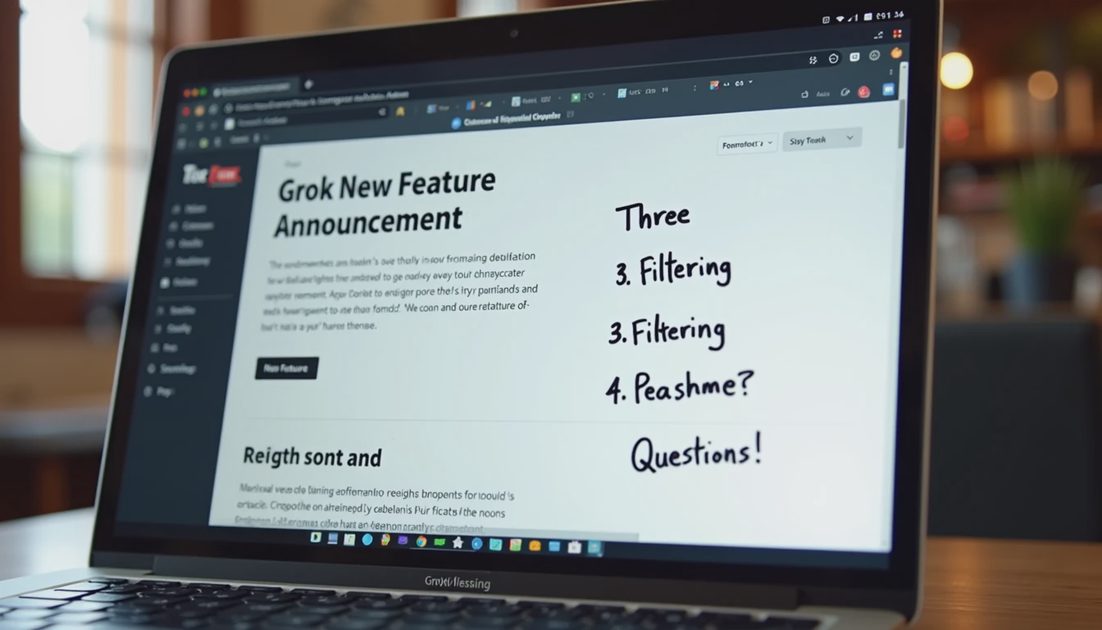
A new Grok capability lands. The announcement is polished. The demo looks smooth. My calendar is already full. The question is not “Is this impressive?” The question is “Does this earn a permanent place in the work I already do?”
This post is the decision process I use before I change any part of my content-operations stack. It is deliberately slow. Most features do not survive it.
Let’s see what it does on a real Tuesday.
The Three Filters Before Any Test
I do not open a new feature until it clears three quick filters:
Is the change confirmed through an official source or a reliable primary report?
Can I map it to a task I already perform at least once a week—email, meeting follow-up, research, or copy?
Can I finish a meaningful test without missing one of my own deadlines?
If any answer is no, the feature goes into a “watch” note and stays out of my active workflows. Most announcements stop at filter two.

What a Real Test Looks Like
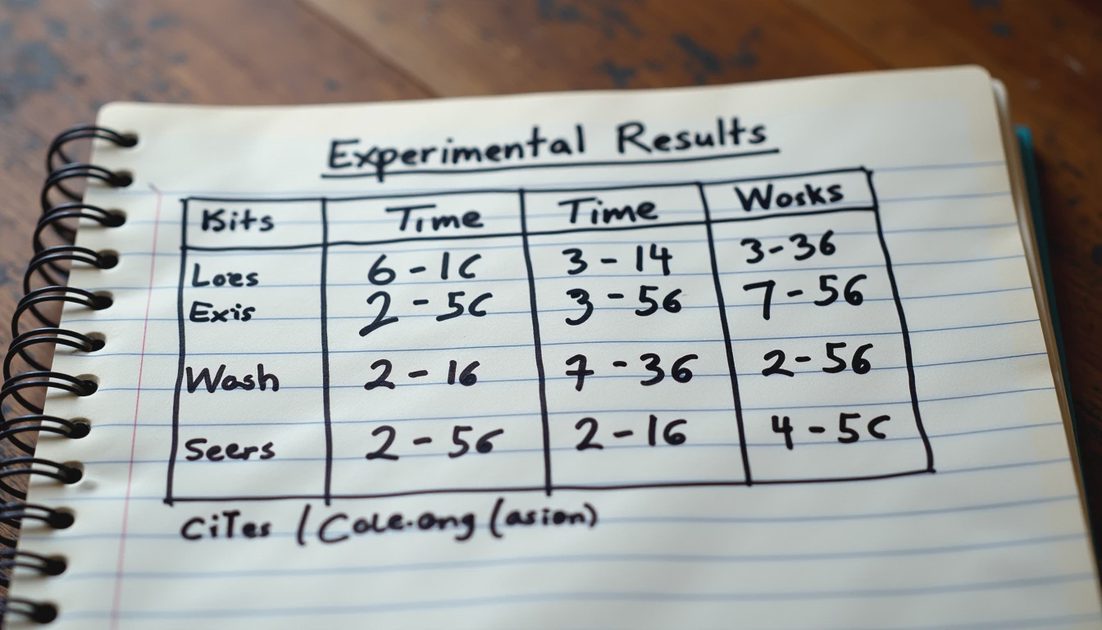
When a feature clears the three filters, I run a single, time-boxed experiment. I pick one real task that is already on my list, use the new capability exactly as a normal professional would, and record four things:
Time from start to usable draft
Number and type of human edits required
Whether the output created any new verification work
Whether I would reach for the feature again under the same conditions next week
I do not run multi-day evaluations. I do not compare model versions. I ask only whether this specific capability reduced friction on a task I already own.
Filter or step | Pass condition | Typical failure |
|---|---|---|
Confirmed source | Official or primary report | Rumor or secondary summary |
Maps to weekly task | Clear link to email, meeting, research, or copy | Interesting but irrelevant |
Testable this week | Can finish without missing deadlines | Requires multi-day setup |
Time-boxed experiment | Single real task, four recorded metrics | Open-ended exploration |
What Usually Happens Next
Most features that reach the experiment stage produce one of three outcomes:
Clear time savings with acceptable human-check cost → I add it to the relevant prompt skeleton and keep using it.
Neutral or mixed results → I archive the notes and leave the workflow unchanged.
Extra verification or new failure modes → I stop using it and record why.
I have retired more features than I have adopted. That ratio feels healthy. A tool that only works on tidy demo inputs is not a tool I can recommend to anyone who has to ship on a Tuesday.
The decision process itself is the point. It keeps me from treating every announcement as an urgent upgrade and from ignoring useful changes because they arrived without fanfare. The filter is the same whether the feature is large or small: does it help me finish the work I already have, with less friction and no new risk I cannot manage?
Less hype, more shipped work. When the next Grok update appears, I will run it through the same three filters and the same time-boxed test. If it earns a place, it will show up in a later Workbench or Monday Test post with the actual numbers. If it does not, it will stay in the watch list until something changes.
I keep a plain-text file called “feature watch” that lists every capability I have evaluated and the outcome. The file is short on purpose. Most entries are one or two sentences: what was tested, what the result was, and whether it is still in use. The file prevents me from re-testing the same promising-looking idea six months later because I forgot the earlier result.
One pattern has appeared more than once. Features that shine on long, clean documents often struggle with the short, messy inputs that dominate content operations—partial meeting notes, stakeholder threads with missing context, research highlights that are incomplete. The decision process forces me to test against the messy version of the work, not the polished version. That single requirement has eliminated more candidates than any other filter.
I also refuse to adopt a feature solely because it is new. Novelty is not a use case. If the existing skeleton already produces acceptable output with low edit time, a new capability has to beat that baseline by a clear margin before I change the habit. The bar is higher than “interesting.” It is “noticeably better on the tasks I already do.”
The process is intentionally conservative. Content operations work is full of handoffs and deadlines. A tool that occasionally saves time but occasionally introduces subtle errors is not a net gain. The three filters and the time-boxed test exist to protect the reliability of the work that leaves my desk, not to maximize the number of Grok features I can claim to use.
When a feature does clear every hurdle, I add it to the relevant Monday setup skeleton and give it two full weeks of real use before calling it permanent. The two-week window catches problems that a single test can miss—edge cases, fatigue with the new steps, or small accuracy drifts that only appear under deadline pressure. If it still earns its place after two weeks, it stays. If not, it goes back to the watch list with a note about what failed.
That is the entire decision system. It is not sophisticated. It is repeatable, fast enough to use under load, and strict enough to keep my workflow from becoming a museum of interesting experiments that no longer help me ship.